
How do We Handle Weeds in Farming without Chemicals, Plastic Films and Plows?

Weeds and pests pose a challenge in commercial farming when unhealthy soils and imbalanced ecosystems allow “invasion” by weeds and pests. To fight with this problem, many crops are sprayed with chemical pesticides not once, but twice or three times:
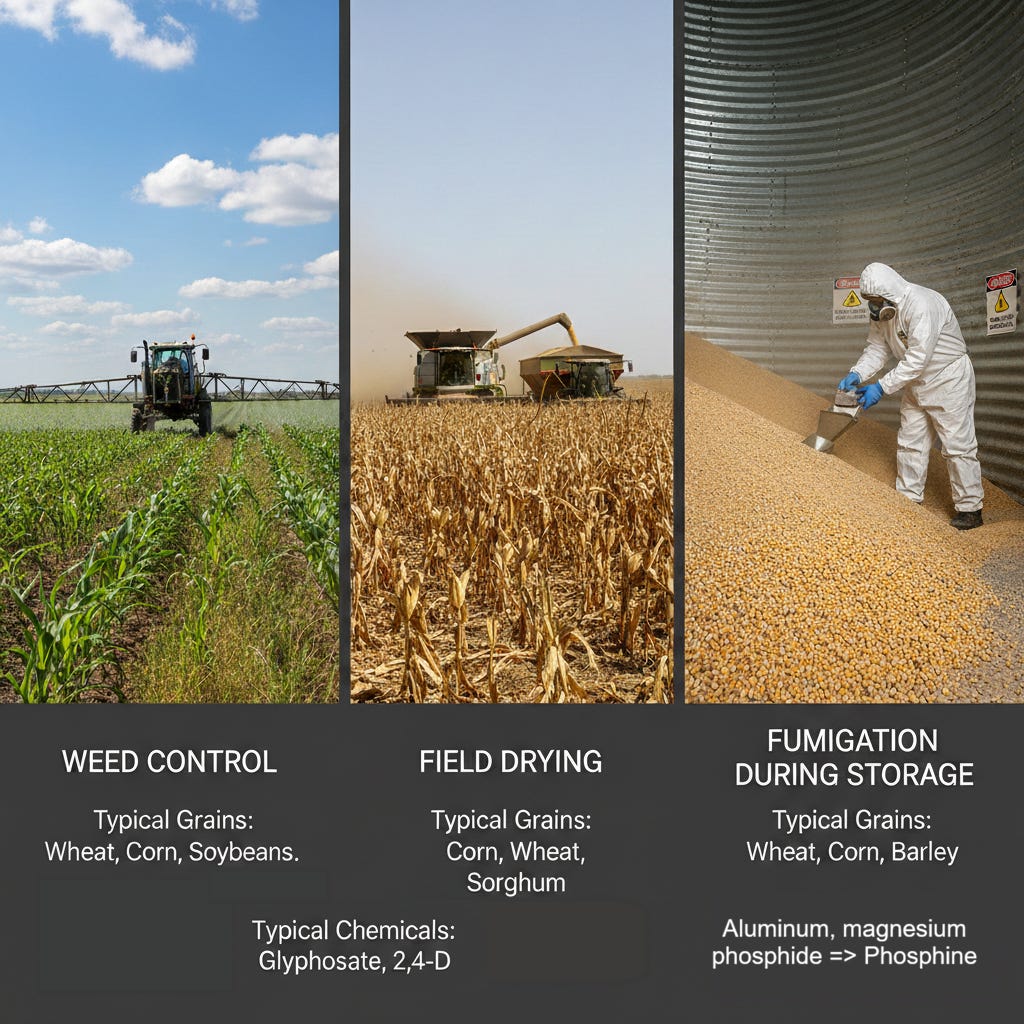
Many farms that do not these harmful chemical pesticides (Please see my article Do Pesticides Impact Fertility, Masculinity and Miscarriages? An Overview of Scientific Literature), resort to deep plowing to kill weeds and also loosen the soil. Yet plows have their own serious drawbacks because deep plowing destroys soil structure and accelerates organic matter depletion. By turning over the soil, plowing exposes fertile topsoil to severe wind and water erosion and kills beneficial microbes through over-aeration and UV exposure. Somethings are meant to be buried underground in nature (such as worms and microorganisms which are part of the soil’s healthy cycle). In addition, heavy plows on tractors can really compact the soil, not a good thing.
So what can a farmer do to avoid both chemical pesticides and deep plowing? Many organic farmers use plastic (agricultural) mulch films to grow vegetables such as onions, garlic, strawberries, tomatoes, bell peppers, and various melons. In fact, many organic vegetables are now grown under plastic films. By providing shade and a rain barrier, these films suppress weeds and regulate soil temperature and moisture, while allowing growth of the cash crop (through holes punched in the film during seeding).
But while plastic agricultural films (like mulch and greenhouse covers) are good for business (as they increase crop yields), they cause significant environmental and soil health issues such as microplastic pollution of the soil, poor recyclability due to contamination, chemical leaching, high labor costs (for removal) and surface water runoffs (because the part of farm covered with the plastic cannot absorb or receive any rain water), which can heighten the risk of pesticides leaving the field (in non organic fields).
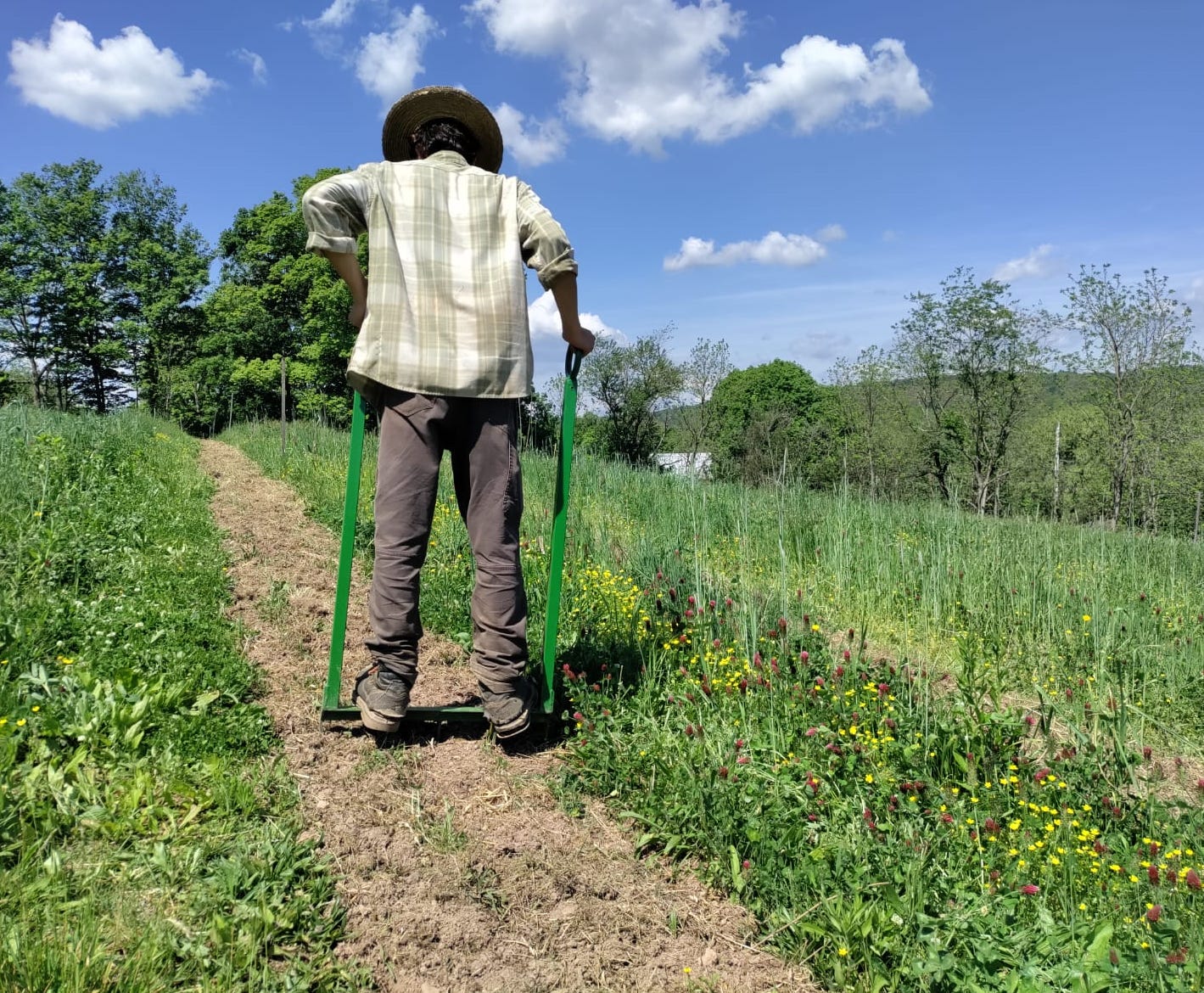
So what do chemical-free farmers using regenerative practices do? For starters, on our small-scale vegetable farm we minimize weed pressure by balancing the soil and not harming it for short-term profit/yield. Then we accept some weed pressure and use labor-intensive techniques such as strip tilling, cover crops, hay mulch, manual weeding and cultivation using tools utilized by our ancestors such as Broad Forks seen in this image. It penetrates 8-10 inches into the soil to break the clumps and loosen the soil without disturbing it too much, as in plowing.
As seen in this image, we use a broad fork (after shallow tilling of surface weeds) by standing on the lower bar to dig deep followed by jimmying (prying) the lower teeth upward by levering the handle down. It’s a great exercise of many muscles and works better for heavier weight folks because more weight means more soil penetration. This is an ideal tool for smaller scale vegetable farms and for people who want to grow food and stay fit by farming on a backdrop of blue skies, and buttercups and crimson clover (lower side of image).

By the way, a good old book about the harms of plowing is Plowman’s Folly by Edward H. Faulkner (1943).
We discuss details of our farming techniques in free seminars locally or by invitation. You can also read my related article below: